Radiology’s Quiet Arms Race
Independent radiologists are now squaring off against radiology corporate giants morphing into AI software titans—welcome to medicine’s newest arms race.
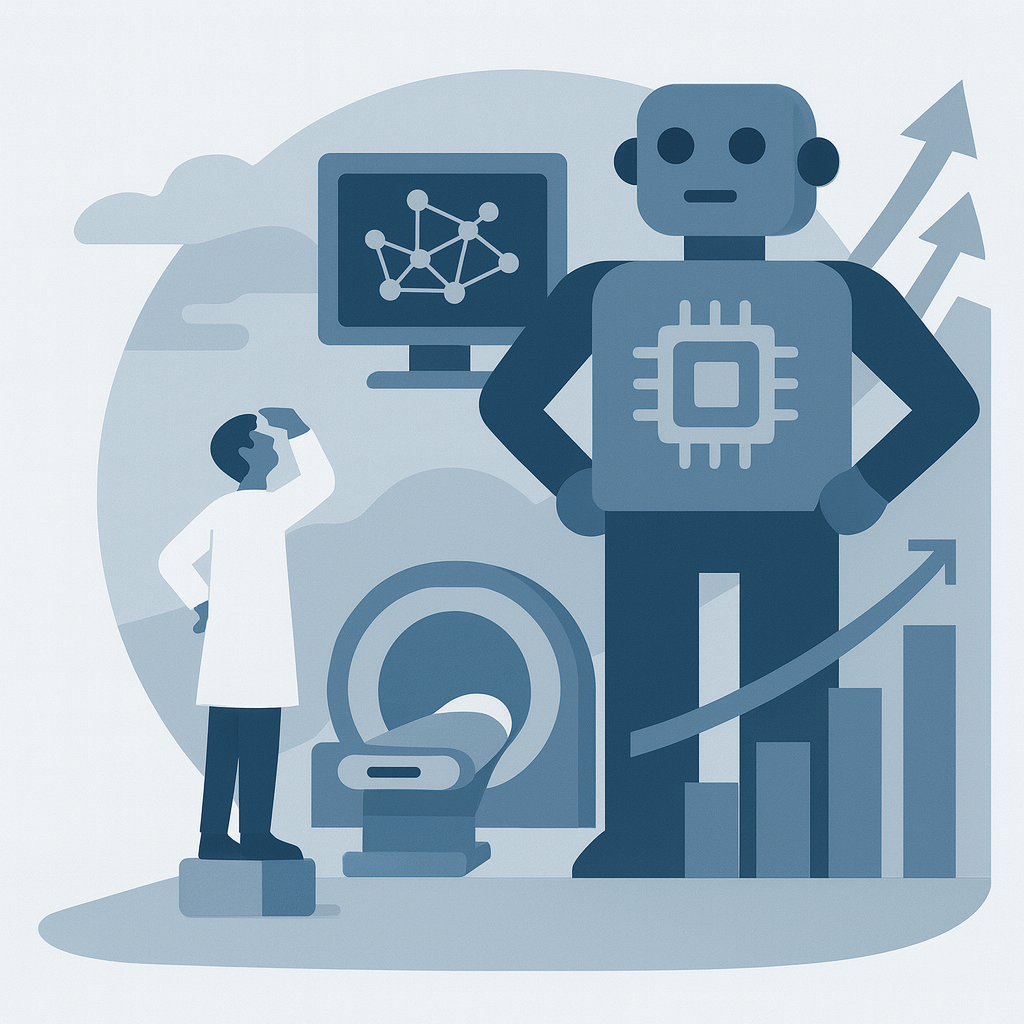
Radiologists build their careers on reading subtle patterns in pixels. Lately they’ve been reading something else: the fine print of artificial-intelligence contracts. Three corporate giants—Radiology Partners, RadNet, and SimonMed—have spent the past few years pouring money into algorithms that shave seconds off every click, dictate reports in fluent medical argot, and reshuffle worklists so the most urgent scans rise to the top. It sounds pedestrian, but in radiology seconds accumulate like compound interest.
The most ambitious gambit belongs to Radiology Partners. In July the 3,500-radiologist behemoth unveiled MosaicOS, a home-grown “AI-native” operating system that listens to a radiologist’s voice, drafts a structured report, cross-checks prior exams, and alerts the ER when it hears words like “pulmonary embolism.” RP’s executives speak of “unlocking clinical capacity,” a polite way of saying more studies per hour, same payroll—a superpower in a specialty paid largely per report.
RadNet, which runs more than 400 outpatient centers, is taking the acquisition route. Over just 36 months it bought four computer-vision startups and stitched them together into DeepHealth OS. One of those tools now flags thyroid nodules on CT scans; another speeds up breast-cancer screening to the point that RadNet’s CEO predicts every mammogram will carry an AI co-signature within five years. Simultaneously, SimonMed has peppered its 170 clinics with fracture-detection and stroke-triage bots, boasting an 82 percent cut in X-ray turnaround time.
None of this replaces radiologists. It arms them. And in the zero-sum game of hospital contracts, an armed reader beats an unarmed one. Health-system CFOs increasingly demand 24/7 coverage, 30-minute STAT reads, and immaculate follow-up tracking. The large aggregators can now promise all three—and prove it with dashboards that spin data from their AI stacks.
That leaves America’s 1,200-plus independent practices in an uncomfortable spotlight. They cannot afford to hire a platoon of machine-learning engineers, yet they cannot afford to look slow. Their way out is partnership: rent the algorithms rather than build them. Natural-language-processing platforms such as Gup auto-draft reports in the background, giving a small group the same reporting speed-up Mosaic boasts about. Pair that with third-party triage and follow-up tools, and a 20-radiologist outfit suddenly plays in the same league as a 2,000-radiologist chain—without surrendering its autonomy.
Radiology has been here before. Voice dictation once felt futuristic; now it’s table stakes. AI is headed for the same fate, only faster. The question for independents is no longer whether to adopt it, but whose badge will sit in the corner of their PACS screen. In a business where contracts hinge on minutes and missed findings, choosing a long-term technology ally has become as strategic as choosing an imaging scanner—perhaps more so, because software can learn.
A new and vivid pattern is emerging: the practices that ally early will read more, bill more, and sleep easier. The rest may find that, in radiology’s quiet arms race, the loudest sound is the silence of a phone that stops ringing with new work.
— Gup Staff